Increase or decrease font size for easier reading :
A+A-
In Hong Kong, the Hungry Ghost Festival (盂蘭節)
is a major Buddhist and Taoist event. Hungry ghosts are the restless spirits
of people who did not have a funeral. There is no one visiting their graves and
they do not receive the gifts that Chinese people would take to their ancestors
to pay respects. They miss out on food and spirit money.
WANDERING SPIRITS SHED
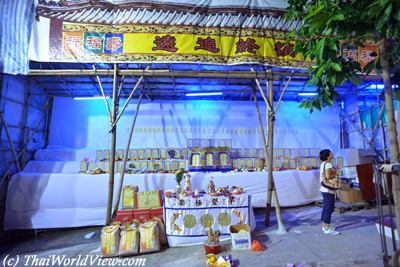
The Wandering Spirits Shed is located next
to the shrine of the King of Ghosts and is opposite of the Taoist priests shed.
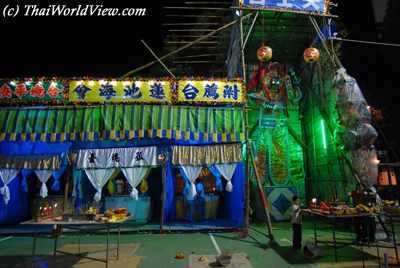
- - Hungry Ghost festival - - Playground Moreton Terrace in Causeway BayThe Wandering Spirits shed is
decorated with blue and white cloths. It is similar to an altar place with
tablets for wandering spirits. There are red lanterns hung on the sides to
attract the lost souls.
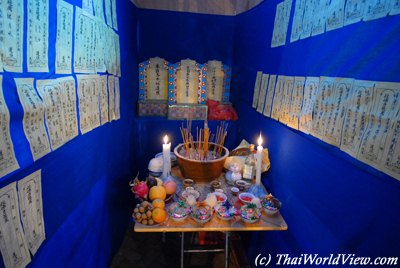
- - Hungry Ghost festival - -The paper effigy of Taai Si Wong sits
behind an incense pot. The effigy of Taai Si Wong is flanked by gold and silver mountains
symbolising wealth.
The month is still considered especially unlucky and many young people might
avoid getting married, moving house, changing jobs or making large investments in stocks, cars or homes.
- - Hungry Ghost festival - -Local residents prepare
offerings and carry them to the main altar at the local playground and
join the ceremonies there.
OFFERINGS
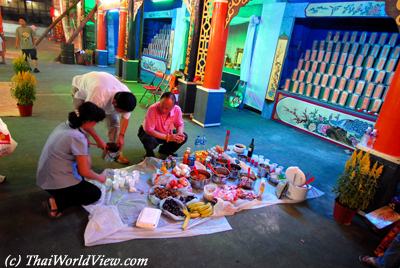
Tradionally every household has to prepare meat, fruits, fresh flowers.
They offer these to the hungry ghosts at the playground or on a temporary altar
table set up in front of their homes.
-- Hungry Ghost festival -- Hong Ning Road Playground in Kwun TongLocal people just want
peace so they laid rice, meat and vegetables before an altar at the
sports ground. It is a five-course banquet for the ghosts.
Appeasing the ghosts is done through preparing a sumptuous
meal for the spirits. Food offering such as fruits (apple, banana, orange), roasted pork,
rice, steamed chicken do happen. It brings peace for one year.
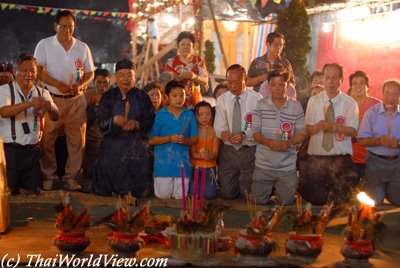
Evening prayersPeople are praying for good luck
in order to help the Hungry Ghosts to transmigrate to a new life.
After a performance is over, the houses are pulled down and moved to a
new site. All unbroken poles are reused.
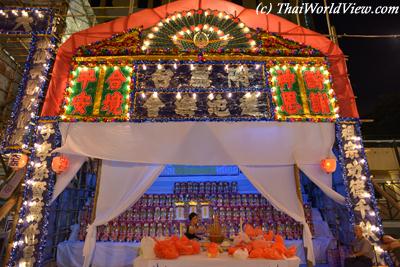
RECOMMENDATION SHED
Next to the Wandering Spirits shed is the Recommendation shed.
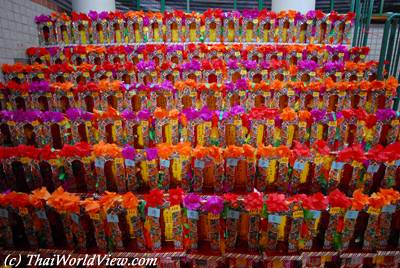
-- Recommendation shed -- Hill Road in Kennedy TownLocal believers make donation
and put names of their ancestors on paper tablets to recommend their ancestors
for receiving worships and blessing.
Some Hungry Ghosts festival processions do also happen.
During this procession the gods are invited. It is also a reminder to the neighbourhood
that the Hungry Ghost festival is coming. The performers from the opera dance and sing to
please the deities.
Ancestral altarMany return to pay respects
to their ancestors because their ancestral tablet is still here.
AUCTION
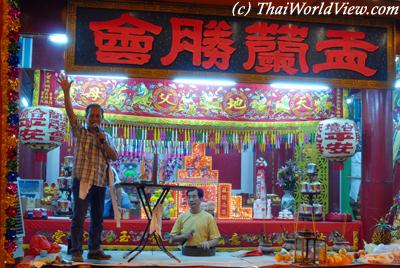
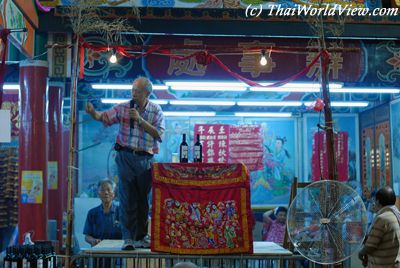
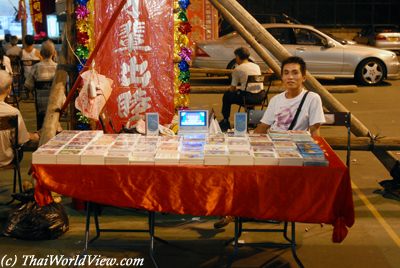
PresenterThe presenter is here to
encourage people to make donations and to buy some miscellaneous objets.
Well wishers are donating money to support this event by auctioning products
which are auspicious to get donations from the public.
These treasures are believed to have absorbed the prayers offered by
the monks and thousands of devotees. People like to think that they contain magical powers that will
grant the owners their wishes and desires.
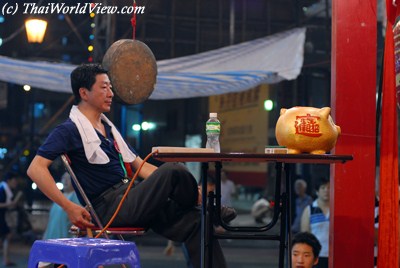
PresenterAuspicious items are auctioned off.
The proceeds are used to fund the year's expenses.
One of the highlight is the auction of treasures of fortune. i.e.
auspicious items which have been placed in the gods shed throughout the celebration.
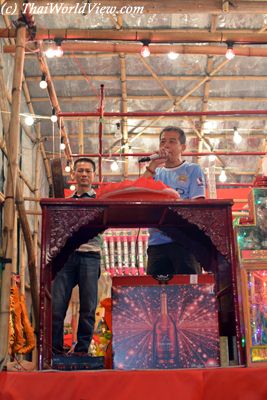
PresenterFunds are gathered to pay priests to
conducts prayers, buying offerings of food, josspaper, paper effigy of Taai Si Wong and
to pay for the stage performance by entertainers.
-- Presenter -- Hill Road in Kennedy TownThe auction always attracts
many people and is key event during the Hungry Ghost festival.
CHINESE OPERA THEATER
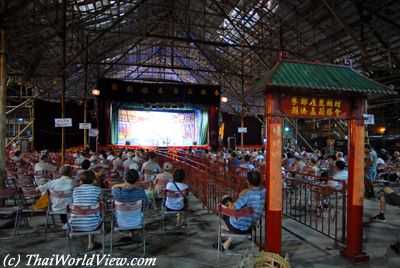
The opera shed is located opposite of the Gods shed.
Chinese opera is performed here for the gods. The show can gain merits for the ancestors.
The show is also a key entertainment for the neighbourhood.
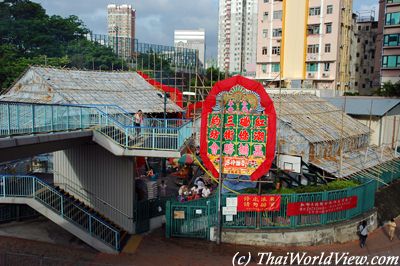
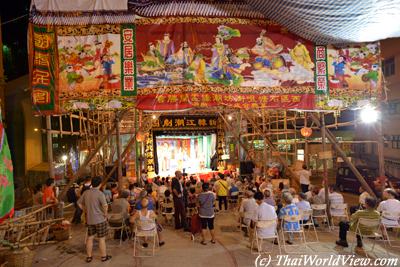
-- Temporary open-air bamboo complexe -- Wuhu Street Temporary Playground in Hung HomTemporary open-air bamboo
complexes are erected in local parks or playgrounds.
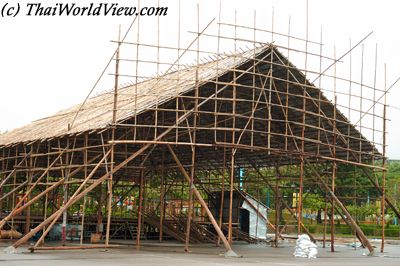
The big temporary open-air bamboo complexe is one of the main building
during the Hungry Ghost festival. It is used to host a Chiu Chow Chinese opera.
Chiu Chow people are also spelled Chaozhou or Teochew people.
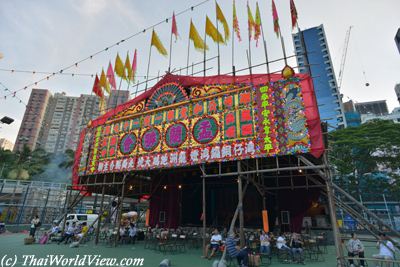
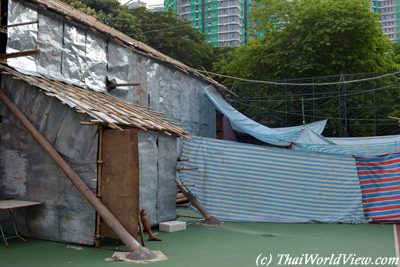
-- Temporary open-air bamboo complexe -- Carpenter Road Park in Kowloon CityShed theatres are usually
made of bamboo, wood and palm leaves. These materials are highly flammable
and fires were a common hazard to troupes and villages. By the early 1960s,
some shed theatres were made from galvanized iron, which was safer and
stronger.
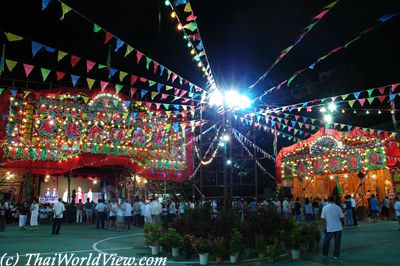
-- Temporary open-air bamboo complexe --On one side there is the
theatre which is for running operas for ghosts, gods and human beings to
enjoy. In the other side is an an altar where huge sticks of incense are
burnt. Behind the altar is the temporary temple where the priests can
recite passages from sacred books.
It usually takes 10 workers about a week to build
four small houses needed for the Yulan festival.
Opera houseAbout 4000 bamboo poles are
needed to build the framework of a 20 000 sq ft opera house, which is considered
small. More than 10 000 are needed to build a big, 100 000 sq ft one. Hundreds
of iron sheets are used for roofs and some walls.
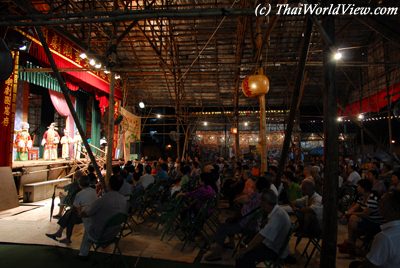
Traditional Chinese operas are held to entertain and distract the
spirits from their pursuit of chaos. Front seats at these operas remained empty as they
were believed to be occupied by ghostly guests. Nowadays, believers politely
inquiring whether the seats are taken. At least it is customary to leave the first row of seats
empty for the hungry ghosts.
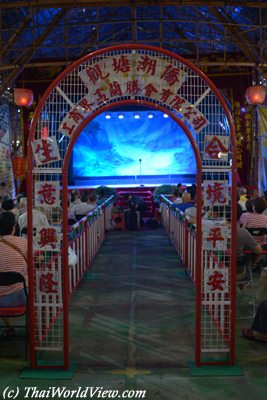
-- Opera house -- Cheung Sha Wan, Lei Cheung Uk estateSometimes there is a direct path
with a door for invisible guests to enjoy directly the Chinese opera.
-- Hungry Ghost festival -- Hong Ning Road Playground in Kwun TongThis is the special path for
the ghosts to go and to enjoy the Teochew Chinese opera.
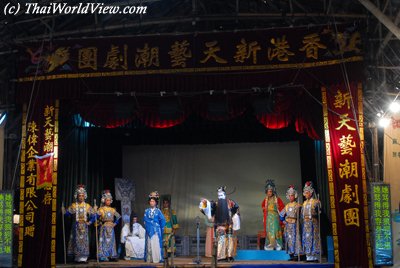
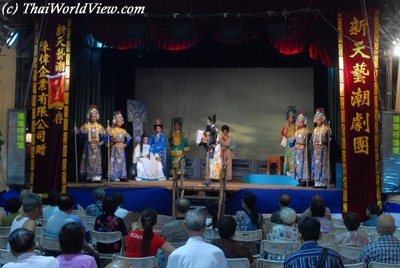
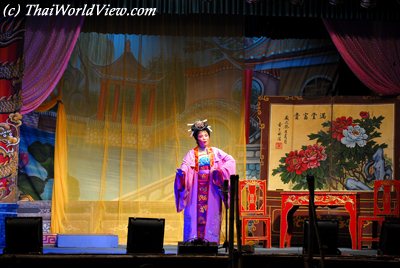
Opera houseA brightly lit stage sits in the large
sports ground, where traditional opera singers provide entertainment for the evening.
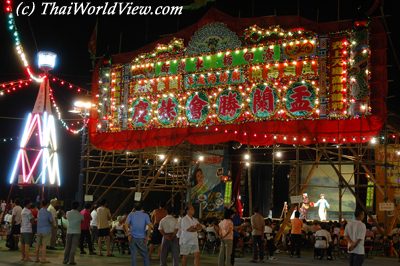
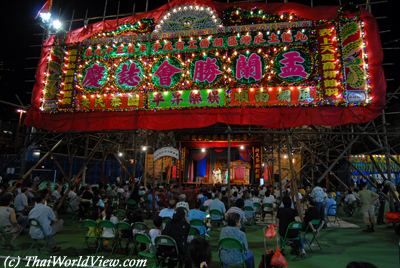
-- Temporary open-air bamboo theater -- Playground Moreton Terrace in Causeway BayThe top portion of the banner tells the title of the
event, the name of the troupe and the name of the major actors and actresses.
Chinese opera do happen when the community scale is big enough.
When the community scale is small such as only one block, they might just organize Taoist traditions
during the Hungry Ghost festival. Organizing a Chinese opera requires fund raising efforts.
Hungry Ghost festival
Depending of the area, the attendance of Teochew opera can be small or big.
Normally when it is near public estates, the attendance is always big.
OPERA PERFORMANCE
Chiu Chow opera
Troupes like the Chiu Chow opera are a fast dying tradition, killed off by age and a lack of
interest among the young. Troupes are often coming from mainland China and not anymore from Hong Kong.
Nowadays most of the audiences cannot follow the
story lines. So some LCD panels display text in Traditional Chinese characters.
Chiu Chow opera
Traditional Chiu Chow Opera singers perform in nightly marathons
for an audience of specters.
Some Chinese people may observe restrictions during this month.
For instance, some believe it is not advisable to wander out of the house at night for fear of
encountering ghosts and no organisation of happy occasions such as weddings.
Hungry Ghost festival
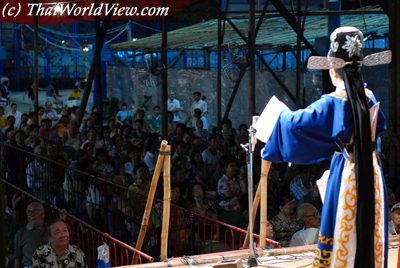
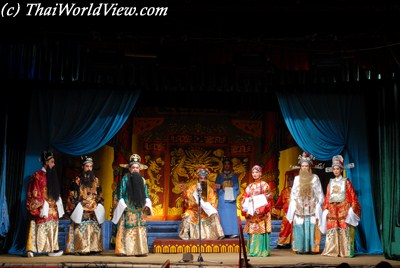
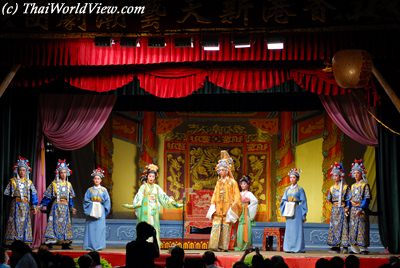
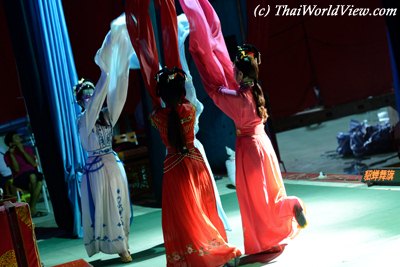
Traditional Chinese opera singers perform in a makeshift stage before an elusive audience,
i.e. ghosts from hell and humans!
Yue Lan festival such as in Kai Tak East Playground - Choi Hung
is a lively traditional event. Many people there are watching Chinese opera and making offerings.
Certainly because it is close to Rhythm Garden huge estate.
Hungry Ghost festival
Entertainment including Chinese opera singing and dancing is provided for the enjoyment
of the lost souls.
Hungry Ghost festival
The ghosts like to see singing and dancing also. A full-scale Chinese Opera
is offered to them.
Hungry Ghost festival
Traditional opera singers provide entertainment for spirits at the start of a
three-day ritual during the Ghost Month.
Hungry Ghost festival
Nowadays mainly middle age people are watching Chinese opera. Cantonese opera was very popular
before cinema apparition. Then cinema pushes also Cantonese opera as first movies were about Chinese
opera but then it gradually reduces.
There are no more Cantonese operas in urban areas but performances
are still happening during traditional festivals such as deity birthday.
Hungry Ghost festival
Chinese opera VCDs performed in other festivals are on sales for fans.
Hungry Ghost festival
Only part of the opera troupe gets accommodation arrangement. It is hard for them to come
performing in Hong Kong. Summer is too hot. The payment is not better but the opera troupe wants
to reach an status of "overseas" or "international" level. (Thanks Paul).
BACKSTAGE
-- Hungry Ghost festival -- King George V Memorial Park in Yau Ma Tei
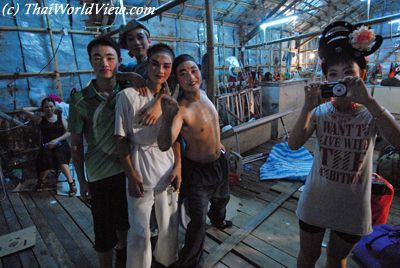
The backstage is not always accessible. Sometimes the performers hide
the entrance with some cloths.
Performers from mainland China are always friendly and allow to come in
the backstage to take pictures. They appreciate photographers who give them some pictures.
-- Hungry Ghost festival -- Cheung Sha Wan, Lei Cheung Uk estate
Those performers are coming from Fujian province in Mainland China.
As usual the performers are very friendly, offering tea, water, fruits, even to eat dinner also and
allowing to take whatever pictures in the backstage. I wanted to take pictures of them but finally
they all wanted to take pictures of me! It seems I look very tall for them.
Chinese opera troupes come from mainland China. They often come either from
Shantou area or Fujian province.
-- Hungry Ghost festival -- Aldrich Bay playground in Shau Kei Wan
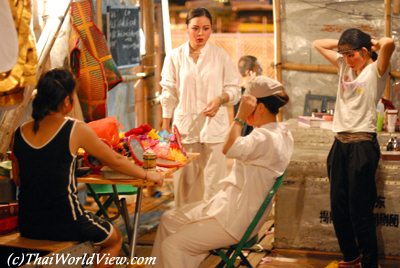
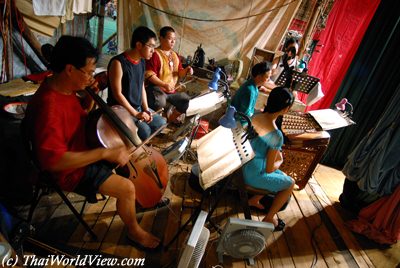
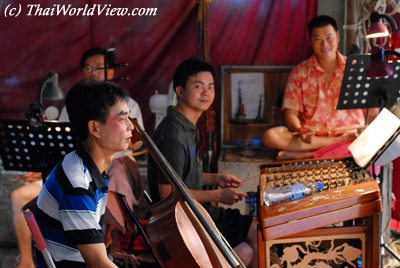
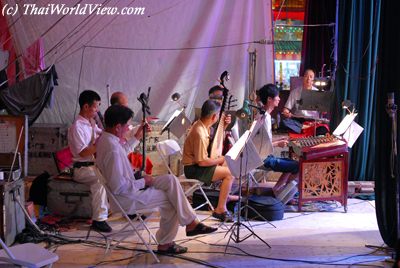
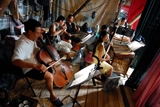
Normally the backstage is divided into three parts. Often on the left part, there are musicians playing
cords instruments and a computer operator. On the right part, musicians are playing cymbals and gong. In the middle
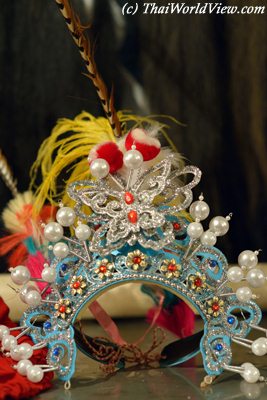
part, there is a space to sit, chat, change clothes and put make up on. It includes wardrobes with costumes and
cupboards with impressive hats such as crowns.
Men and women change clothes together. There is no privacy.
Anyway they always keep some white clothes beneath so decency remains.
-- Hungry Ghost festival --
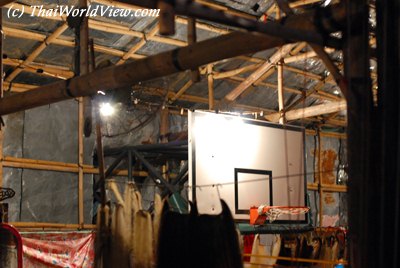
Temporary open-air bamboo complexes are erected in local parks or playgrounds.
The basketball stand can clearly be seen here!
Chinese opera performers receive their salary on daily basis.
-- Hungry Ghost festival --
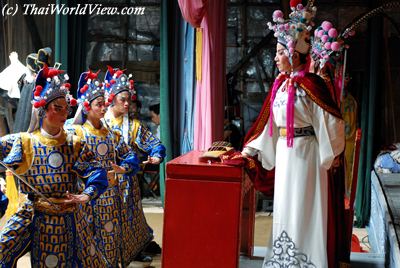
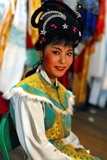
There are elaborate Chinese opera hats and helmets in the backstage.
-- Hungry Ghost festival -- Sau Mau Ping road Soccer Pitch in Sau Mau Ping
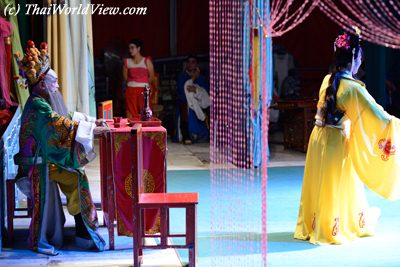
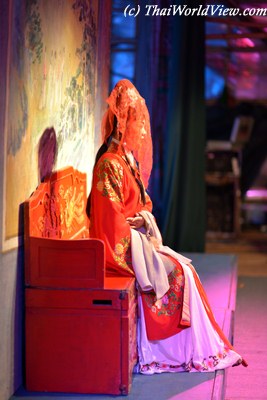
Colorful Chinese opera representation viewed from the backstage during
Hungry Ghost festival.
-- Hungry Ghost festival -- Sau Mau Ping road Soccer Pitch in Sau Mau Ping
Some opera representations are more colorful than others as they include dances also.
White makeup seems Ok with little impact on the skin despite
daily usage according to the performers.
-- Hungry Ghost festival -- Hong Ning Road Playground in Kwun Tong
Red color is used as it symbolizes happiness so no surprise that is used for Chinese
weddings.
Various troupes require various salary. For Yulan committees having
limited budget, they may hire Chinese opera troupe performing in villages. Their skills might be
less good. Costumes and decoration might be a bit old or not so clean. Some troupes have been properly
trained in Guangzhou. Some others learn through karaoke. Some troupes even sell their VCDs.
-- Hungry Ghost festival --
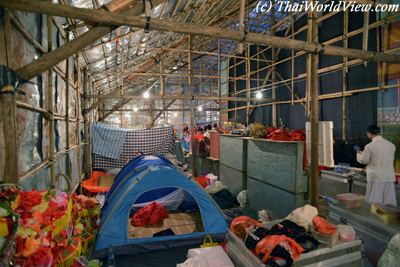
Some troupe sleep in the backstage or under the backstage. Couple can sleep together.
Single people can sleep wherever they want.
Men sleep in the backstage to take care of the belongings.
Depending on the troupe budget or arrangement, women and some older team members
take a bus and often sleep in some buildings located in New Territories.
MUSICIANS
-- Hungry Ghost festival --
The opera is one of the highlights of Hungry Ghost month.
The local communities stage street operas in an effort to appease the spirits.
After a Chinese opera performance is over, it is time for removing make up,
time for shower, tea and night diner such as congee.
-- Hungry Ghost festival --
It is very hot inside the backstage as there is no air circulation. So often performers
might open a temporary window to let air coming. Musicians have their own small fan.
Chinese opera troupes are coming from mainland China because the
younger generation growing up in Hong Kong cannot speak fluent Teochew (<5%), not even to mention
joining opera groups, a hard and low-paying job. Similarly, Hakka and Wai-Tau languages/dialects
are also disappearing in the New Territories (Thanks Anthony).
-- Hungry Ghost festival -- Cheung Sha Wan, Lei Cheung Uk estate
Quite a few of these opera troupes are traveling from one Yulan festival to the
other around Hong Kong during the Ghost month. Many of them are sleeping in the
backstage or under the stage. It is something they used to do in the countryside
long time ago in China. Nowadays not any more in China but still in metropolitan
Hong Kong!
Performers of Chiu Chow opera help each other and can perform many tasks
such as singing, acting, playing some instrument, changing decoration.
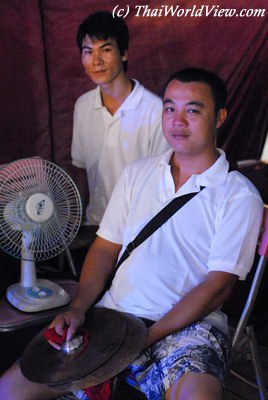
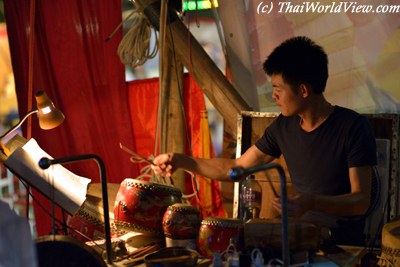
Musicians
Some musicians provide percussion music for accompanying the stage movements.
Two other players perform on cymbal and gong.
It is so hot in the backstage. It looks like a sauna during summer time!
While taking pictures, it is better to use some long lens to avoid disturbing the performers in their
make up preparation as the backstages are never that big.
-- Hungry Ghost festival --
This troupe is performing in Chinese opera house made of concrete and steel poles.
No bamboo used.
Troupe owners and performers are normally always friendly.
They sometimes share some food and tea. It is always welcome to send digital pictures
to them through WeChat application or print copies.