Increase or decrease font size for easier reading :
A+A-
Each year, Hong Kong celebrates the birthday of Tin Hau (天后誕), also
known as the Queen of Heaven and Goddess of the Sea, who enjoys a special place in people's
hearts thanks to the territory's long maritime history. Many people in Hong Kong still
owe their livelihood to the sea and celebrate Tin Hau's birthday every year.
- - Tin Hau festival - - Ma Wan
While still popular, the majority of the Cantonese Opera performances audiences
are mainly made up of older people. Many young people expressed their boredom and sense of
anachronism about Chinese Opera.
The temple in the Tin Hau area, east of Victoria Park, in Eastern
district, on Hong Kong Island, has given its name to the area and to the MTR station serving it.
- - Tin Hau festival - - Ma Wan
Cantonese opera is a common feature of important Chinese festivals,
such as the birthday of Tin Hau or the annual Bun Festival on Cheung Chau island,
where temporary bamboo theaters are erected.
Tin Hau statue takes up temporary residence
on a viewing stand that faces the stage.
- - Tin Hau festival - - Ma Wan
During the Tin Hau Festival, there are Cantonese opera performances and
competitions for the best "Fa Pau" or floral shrines and each year, the festival
attracts thousands of people praying for good fortune and peace.
- - Tin Hau festival - - Ma Wan
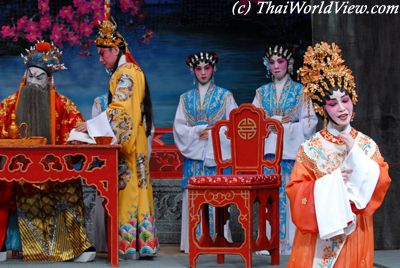
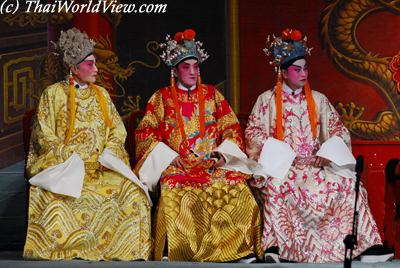
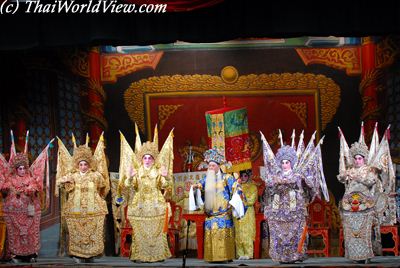
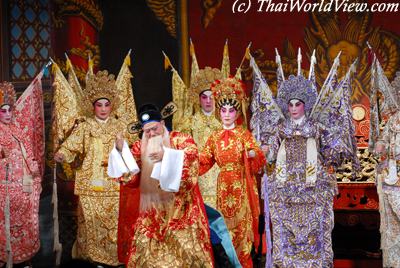
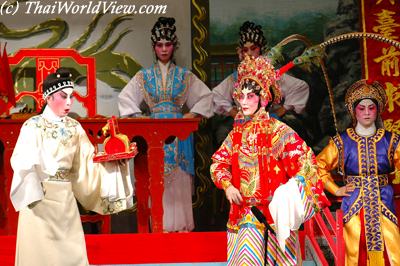
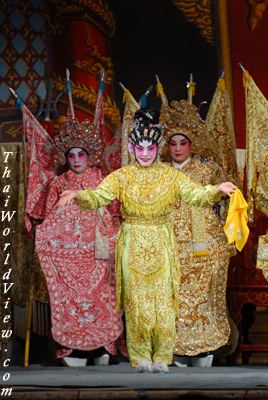
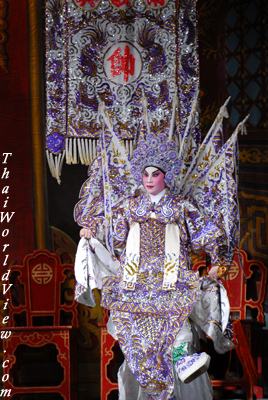
Cantonese Opera is a traditional Chinese art form that involves music, singing,
martial arts, acrobatics, and acting.
According to legend, Tin Hau was born a thousand years ago
and was the daughter of a fisherman in China. As a child she had the gift of predicting
storms and on one occasion she saved her father's boat during a fearful storm.
Over the years, stories were told about how Tin Hau had saved fishermen from
drowning by pulling their boats to shore and soon temples dedicated to her appeared.
- - Tin Hau festival - - Ma Wan
Fishermen make floral paper offerings to Tin Hau, the goddess of the sea, hoping
for fine weather and full nets.
There are over 70 temples in Hong Kong dedicated to the Goddess.
- - Tin Hau festival - - Ma Wan
Tin Hau's birthday is celebrated to bring safety, security, fine weather and
full nets during the coming year.
- - Tin Hau festival - - Ma Wan
Temple fairs have always been an important and integral part
of life in the Chinese community. Village folk flocked to their
local temples during festivals to pay tribute to deities or pray for good harvest and
fortune.
These temple fairs served as social occasions for villagers
but also they provided opportunity for entertainment, cultural exchanges and businesses.
There were stalls selling many different goods, performers doing acrobatics, martial arts,
puppet shows and Chinese opera performance.
- - Tin Hau festival - - Ma Wan
The temple fair is a mini-carnival for villagers to enjoy and an occasion to
showcase local cultures. To date, temple fairs are still a regular feature in
Mainland China, Hong Kong festivals and Taiwan.
- - Tin Hau festival - - Ma Wan
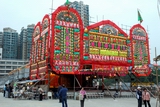
On the site for Tin Hau festivities, Cantonese Opera performances runs for a week.
A temporary building is constructed of timber, bamboo and tin sheets and can held audiences
of up to one thousand people for the opera performances.
Once the festival is over, the building is being dismantled
quickly and efficiently. These temporary structures use the same technology as the bamboo
scaffolding for constructing high rise buildings and for the maintenance of the
exterior of buildings.
- - Tin Hau festival - - Ma Wan
The temple yard is transformed by the temporary architecture of the opera theatre,
stalls selling paper offerings, food, flags and banners.
Traditional banners are brightly illuminated at night and the
amplified sounds of the opera orchestra echo across the neighbouring villages or estates.
The opera runs for a week until the last day of the Tin Hau festival.
The Cantonese opera performances attract large crowds, perhaps one thousand people
per performance.
- - Tin Hau festival - - Ma Wan
Every year, neighbouring villages join together to hold traditional ceremonies to
celebrate the birthday of Tin Hau. The celebration activities last for a few days and
one of the items is the staging of Chinese opera.
- - Tin Hau festival - - Ma Wan
For Tin Hau birthday tens of thousands visit more than 70 Tin Hau temples each year.
In addition to prayers and worship, believers celebrate the birthday
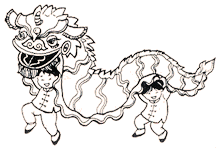
with dragon dances, lion dances, Chinese opera and flower parades.
Tin Hau deity has dark skin, wears an old red robe
and sits on a grass mat. When she was 28 years old, she climbed a mountain and
flew to heaven.
- - Tin Hau festival - - Ma Wan
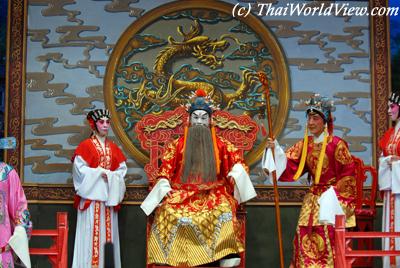
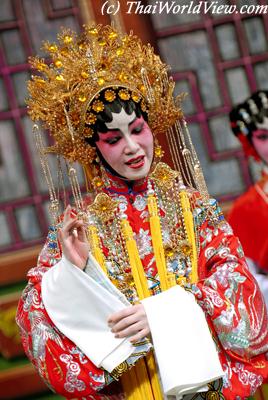
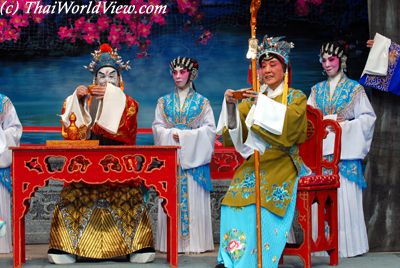
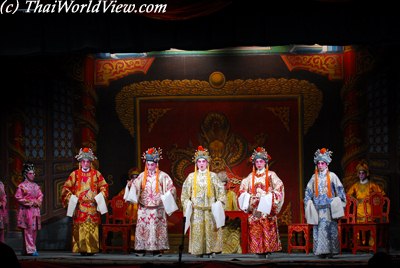
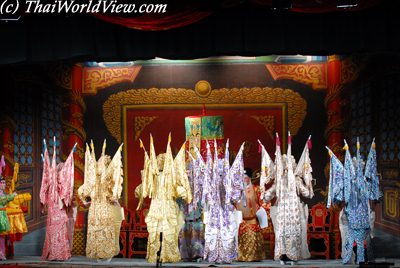
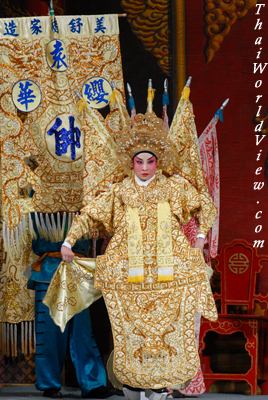
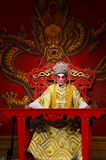
Cantonese Opera is performed to celebrate the annual Tin Hau festival.
Actor-singers are usually dressed in embroided robes, elaborate headdresses
as well as platform shoes.
Believers claim Tin Hau still saved many lives each year.