Increase or decrease font size for easier reading :
A+A-
LIKAY (ลิเก) is a Thai popular
form of folk theatre.
Likay performance
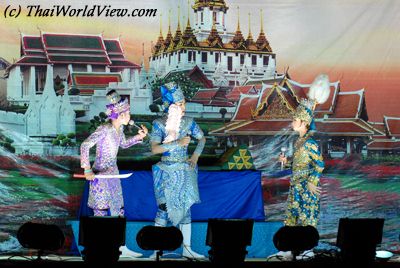
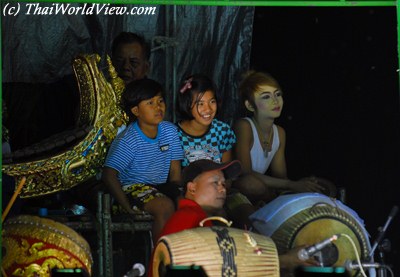
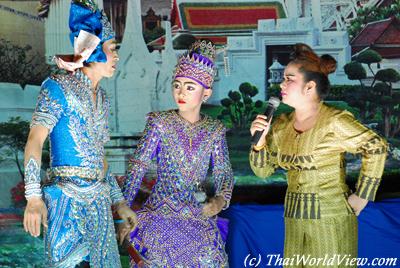
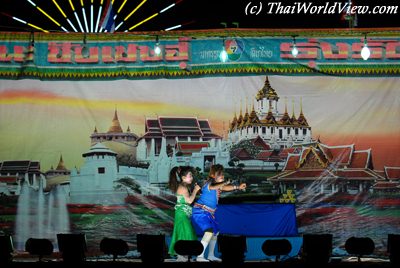
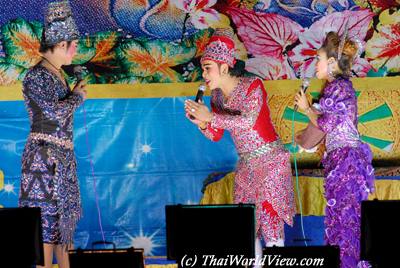
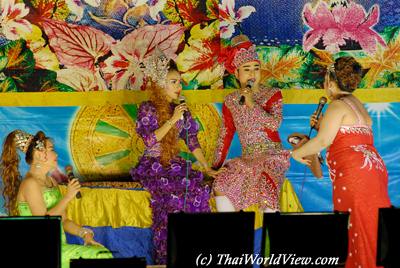
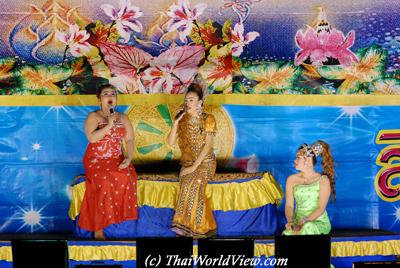
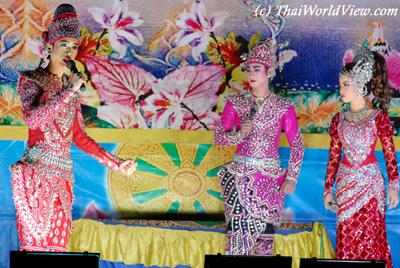
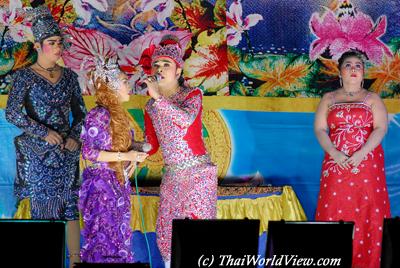
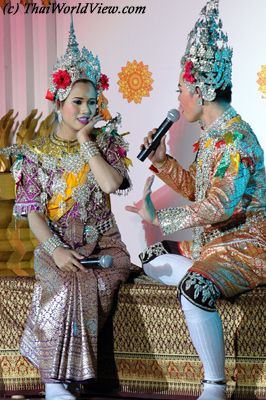
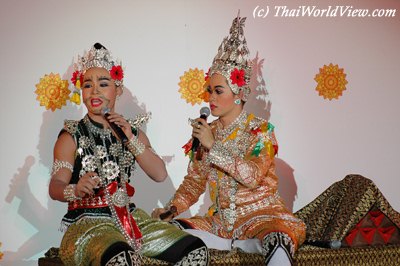
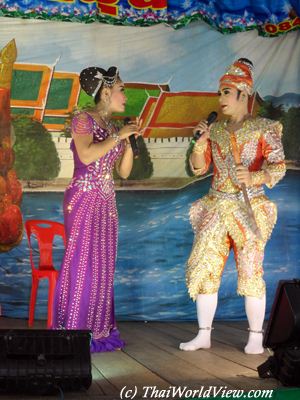
Actors on the stage are acting and singing. The whole sequence is accompanied with a classical
orchestra or modern orchestra.
Likay performance
Usually, practitioners of Likay must perform the "WAI KRU" rite (paying respects
to the teachers) before going on stage.
Likay performance
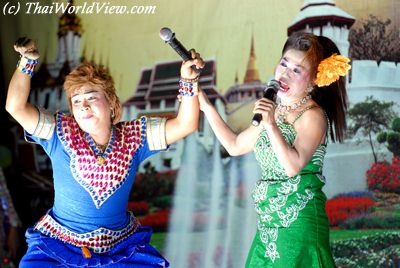
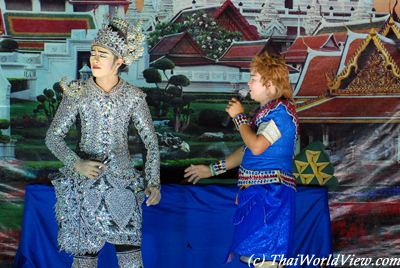
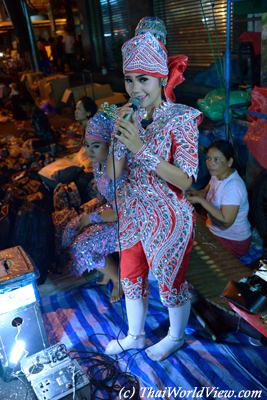
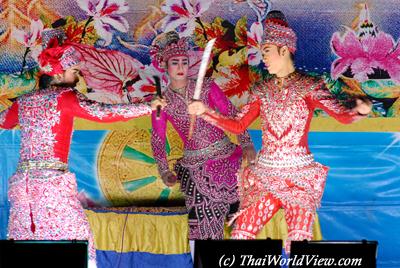
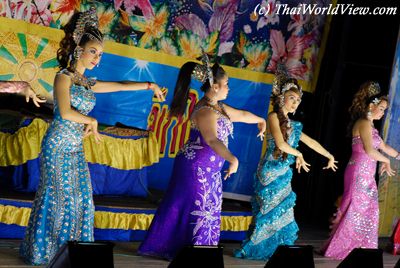
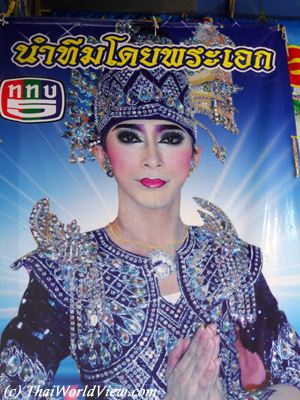
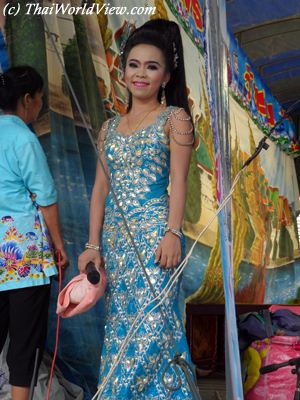
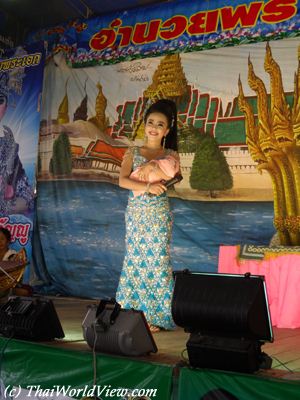
The actors are dressed with flashing clothes and with
brilliant stuff. Men use cosmetics. Their lips and cheeks are
really reddish.
Likay performance
In Thailand, there is a dedicated cable TV channel for Likay performances.
It is called "Rose" channel.
Likay performance
In Central Plains area, when there are big events such as Buddhist temple annual fair or
local village celebrations, a "LIKAY" troupe is often invited.
Likay performance
A "LIKAY" troupe is famous if the main actor
(พระเอก - "PHRA EK")
is handsome. Performances are always funny and often include love stories.
Spectators often clap hands when an actor is performing well and then
offer flower garlands to him.
Likay performance
This skilled Likay young artist was performing in Klong Tom area in an outdoor market.
A sign was indicating that any money donated will be for him to pay his school studies
(clothes, book...).
Likay performance
Mookmontri Street (ถนนมุขมนตรี)
in Nakhon Ratchasima has an historical importance. It was once
known as the Likay district as the whole street was occupied by more than
200 Likay troupes in its peak during World War 2.
This place is also called Kollywood as a short name for Nakhon Ratchasima is Khorat.
Likay performance
The legendary Katookong brothers (National Artist Boonyang Katookong
- ครูบุญยัง เกตุคง) came to this neighbourhood.
Likay performance
The Likay folk performances became less competitive and the number of
troupes declined rapidly. It is now standing at under 20.
Likay performance
Likay troupe performances can often be seen in big annual temple fairs.
Such fairs always include various entertainments events (Likay, music concert,
outdoor cinema, games, food stalls) to attract visitors.
Likay performance
Likay is the most popular form of Thai theater and
such performances can be seen at temple fairs and other special events.
Special events could be a yearly house-warming ceremony in Central Plains area.
The hosts is inviting a Likay troupe. The whole village can then enjoy free Likay
performance.
Likay performance
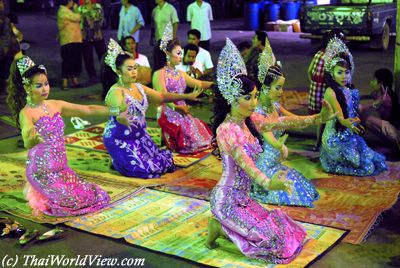
Those ladies, practitioners of Likay, are performing the "WAI KRU" rite
(paying respects to the teachers) before going on stage. They are also paying
respect to local deity per the request of event organiser.
Likay performance
One old Thai sayings says that Thai women shall never trust boyfriends or husbands who work
as policemen, boatmen, Likay performers or on the railway!
Likay performance
ome Likay troupe do combine concert and folk theater performances
on the same stage.
Likay performance
Likay is a famous folk-art performance in Thailand. It dates back
to the late 19th century.
Likay performance
Folk opera known as Likay has become rare in Bangkok over recent years. It is still very
popular in central Thailand, with troupes staging regular performances in front of big audiences.
Likay performance
Nowadays modern Likay troupes feature LED display and also surround sound system.
Likay performance
Most Likay troupes have a repertoire of more than 40 tales often adapted from
the Indian traditional stories.
Likay performance
Over the decades, Likay, has evolved but it has never lost its unique Thainess thanks to
impromptu verse, fast-paced action, sparkling costumes.
Likay performance
Normally Likay performances happen on a stage but in some private events such as ordination ceremonies,
troupe could perform on the ground.