Increase or decrease font size for easier reading :
A+A-
Wat Tai Wo is located in Tai Po District. This district covers the areas
of Tai Po, Tai Po Kau, Ting Kok, Plover Cove and the northern part of Sai Kung Peninsula on both shores
of Tolo Channel.
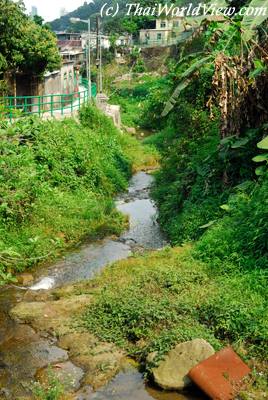
Small stream
A journey to Wat Tai Wo is worth as this Thai Buddhist temple is located on a hill
inside the jungle.
There are a few Thai Buddhist temples in Hong Kong but the most
authentic and beautiful one is located in Tai Po district.
It is called Wat Mekthumvanaram or Wat Tai Wo.
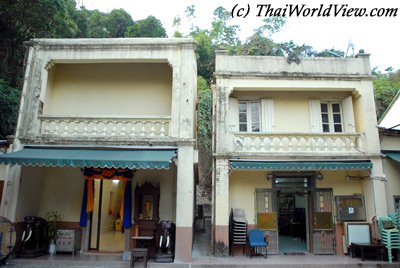
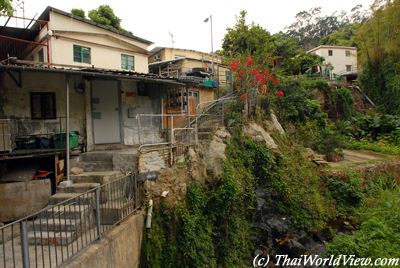
Old House on the way to Wat Mekthumvanaram
To reach Wat Mekthumvanaram, visitors shall take MTR train up to Tai Wo station
then go through Shek Kwu Lung village.
The journey takes around 45 minutes. It allows wandering
through local villages and a small path along hills.
Small stream
This small stream is really refreshing with cold water coming from the mountains.
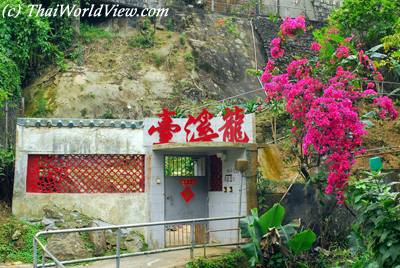
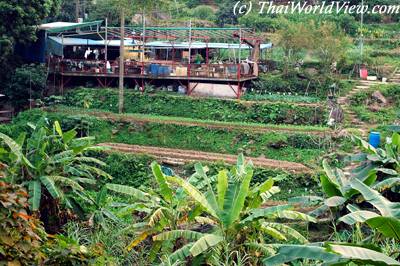
Countryside near Wat Mekthumvanaram
The area is quite unknown and remote as it separated from Tai Wo by
the highway going to China.
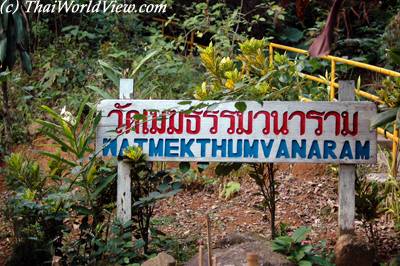
Wat Mekthumvanaram
Wat Mekthumvanaram is a remote Thai forest temple located in Tai Po district close to Tai
Wo MTR station.
The full address is วัดเมฆธรรมวนาราม (ไทหว่อ)
51 Pun Chun Yuen Tsuen, Tai Po, N.T, Hong Kong. Tel is 2653 6758.
Wat Mekthumvanaram
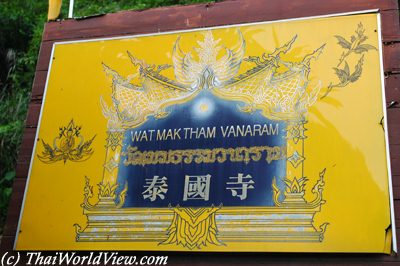
Wat Mekthumvanaram is also called Wat Mak Tham Vanaram depending
who is doing the translation from Thai characters to Latin characters!
Wat Mekthumvanaram
Wat Mekthumvanaram has received the congratulations from the Thai Royal
family as it was a very difficult task to bring all materials into the jungle to
the top of the hill in order to build the various structures.
Wat Mekthumvanaram
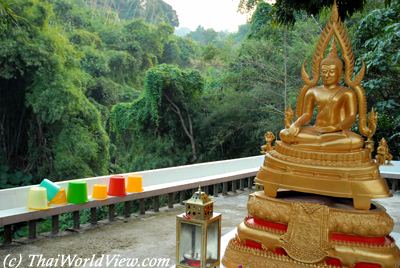
Wat Mekthumvanaram is located on top of a hill inside the jungle. It
is definitely worth a visit. Monks or Buddhist faithfuls offer genuine hospitality and
a warm coffee to any visitors.
Wat Mekthumvanaram
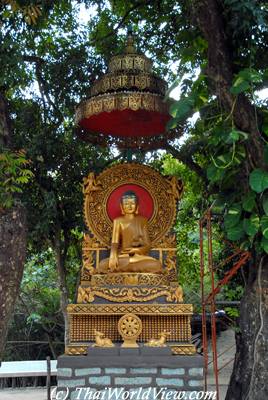
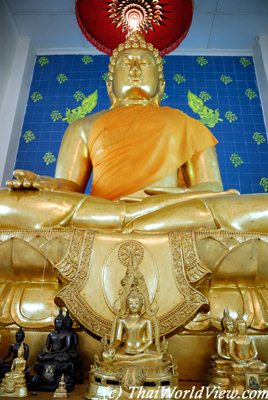
Wat Mekthumvanaram chapel contains a huge sitting Buddha. All visitors
come to pay respect to Buddha in this chapel.
Wat Mekthumvanaram
Wat Mekthumvanaram contains a common kitchen, buildings for monks,
a chapel for the main Buddha statue.
Thai migrant workers in Hong Kong are a significant minority
and about half of them are domestic workers.
Wat Mekthumvanaram
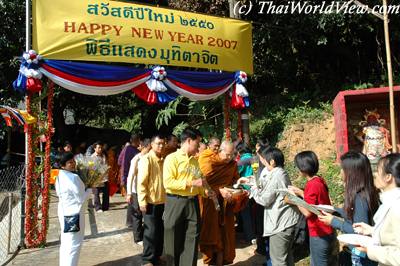
Thai local people, mainly migrant workers and domestic helpers, organize
gatherings for important Thai feasts such as New Year's Day or Songkran festival.
Migrant labour is one option amongst many for working class Thais
seeking better incomes but seldom achieving upward class mobility.
Wat Mekthumvanaram
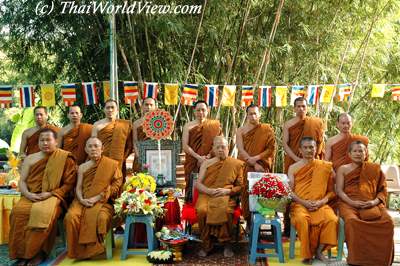
Wat Mekthumvanaram includes a few Thai monks that stay there the whole year.
But for specific important festivals, supplementary monks come also from Thailand.
While most of Thai migrant workers are involved in "low status"
activities, Thais appear to do better than Indonesian migrant workers in terms of the wages
and conditions they achieve, and report less abuse.
Wat Mekthumvanaram
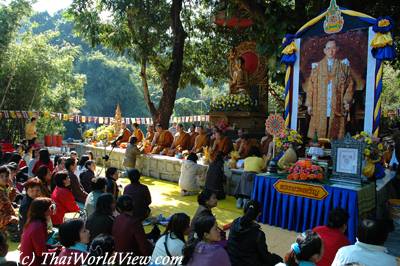
During official Thai festivals, the Thai King takes a prominent
part through huge displayed pictures. The Thai King Rama IX is highly
venerated in Thailand due to his actions towards the Thai people.
Wat Mekthumvanaram
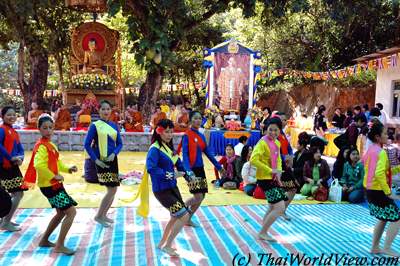
A Thai festival always include dances. As many Thai migrant workers come from
Northeast of Thailand, it is not surprising to find Thai ladies dancing "Molam"
dances that are typical from this region.
Wat Mekthumvanaram
Except for Thai important festivals, few visitors come to Wat Mekthumvanaram.
During the Sunday, common day off, there are more visitors. The apparent low religiosity is partly
due to the fact that Thai temples are not easily reached by public transportation.
Thai Buddhist monks also visit Kowloon City on Sunday morning.
So many Thai workers can make offering to the monks there.
Wat Mekthumvanaram
In year 2001, there was an estimated 15,000 Thai people in Hong Kong, largely women.
Most of them are migrant workers employed as foreign domestic helpers. Other common professions for
Thai people include cleaners, waitresses, hairdressers.
Other locations where Thai people gather are
Kowloon City, Wan Chai, North Point and another Thai Buddhist temple in Yuen Long.
Wat Mekthumvanaram
Thai people flock to Wat Mekthumvanaram for important Thai Buddhist
festivals in order to listen to the speech of the local temple abbot.
According to the Southeast Asian Research Centre, City University of Hong Kong,
which has done a survey on Thai Migrant Workers in Hong Kong, Thai migrant workers dit not feel
they were respected by Hong Kong people as their jobs were considered to be of low status.
Thai people often see behaviour of Hong Kong people as rude in shops or public transports.
Wat Mekthumvanaram
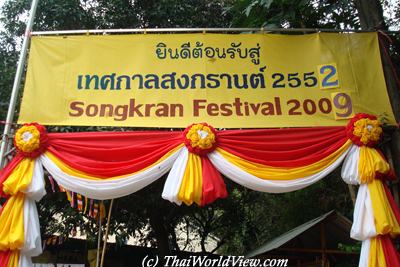
The "SONGKRAN" festival happens during the hot season in middle of April.
Songkran is the ancient New Year's Day. Now the
official New Year's Day happens on the 1st January.
The most popular feast is still "SONGKRAN".
It is celebrated in Hong Kong by the Thai community.
Wat Mekthumvanaram
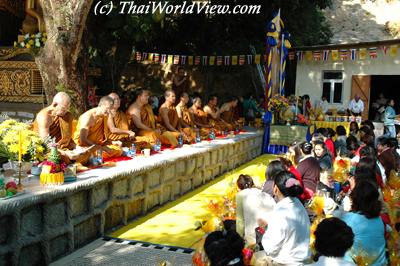
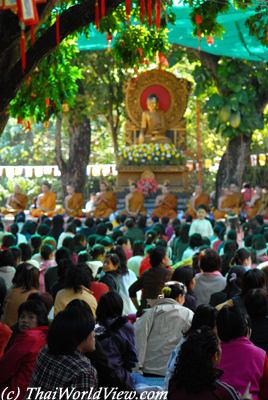
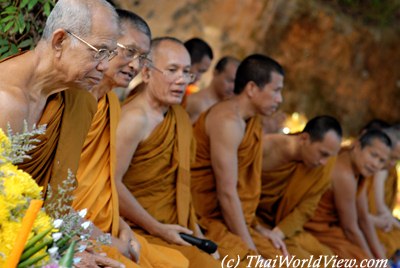
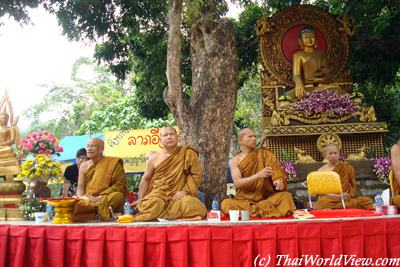
As usual, Thai festivals include Buddhist sermons (พระเทศน์)
and recreative parts.
Wat Mekthumvanaram
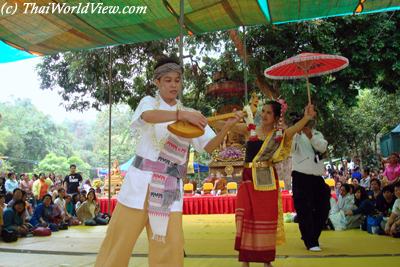
Traditional Chiang Mai style dances are performed once the Buddhist
sermons are over.
Wat Mekthumvanaram
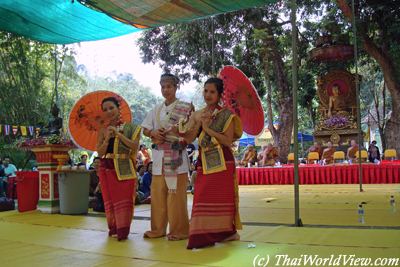
Traditional dances are performed by local members of the Thai community
in Hong Kong.
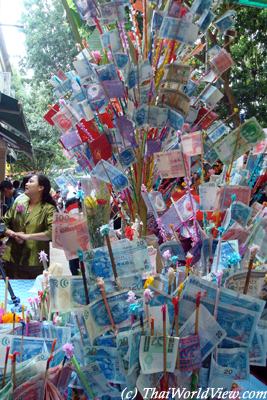
Money tree
Money is given to restore the temple buildings but also to get funds
to build new buildings.
Wat Mekthumvanaram
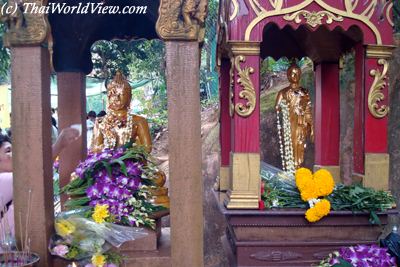
Garlands ("DOOK MALAI" - ดอกมาลัย) are also
offered to Buddha statues.
 Fly there with
Google Earth
Fly there with
Google Earth