CHINESE NEW YEAR
Increase or decrease font size for easier reading : A+ A-
The Chinese New Year's Day is said "WAN TRUT CHIN" - วันตรุษจีน in Thai language. Chinese New Year festivities last three days.
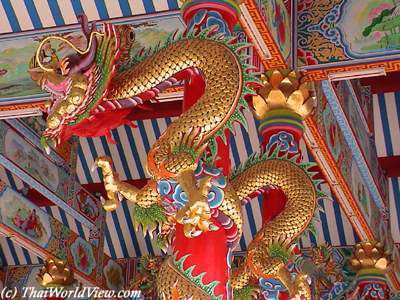
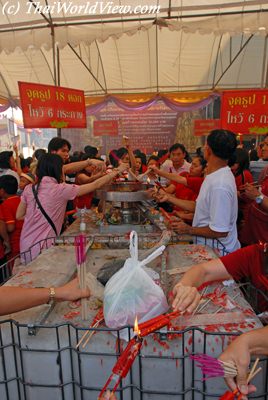
On the day before the Chinese New Year's Day, Thai Chinese people start to make offerings to gods, their ancestors, the God of Land and the God of Luck. Offerings include steamed duck, chicken, pork heads, fresh or canned fruit, chinese cakes (often with durian) and vegetarian food. Chinese flowers ("DOOK MAI CHIN" - ดอกไม้จีน) and golden paper are also offered. Placing a full chicken (representing prosperity and wholeness) behind mandarin oranges (representing wealth and good fortune) has a full symbolic signifiance when setting the diner table for ancestors and the household spirit.
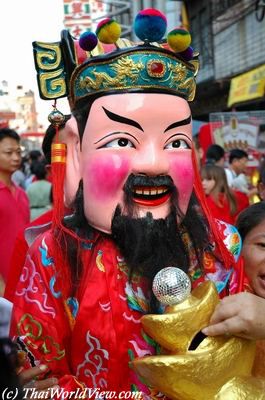
Following old Chinese traditions, some rules must be applied:
- The entire house should be cleaned before New Year's Day. On New Year's eve, all the brooms and brushes are put away. Sweeping and dusting isn't done for fear that good fortune will be swept away.
- At midnight doors and windows shall be opened to allow the old year to make exit.
- Anyone shall not borrow and lend anything on New Year's day.
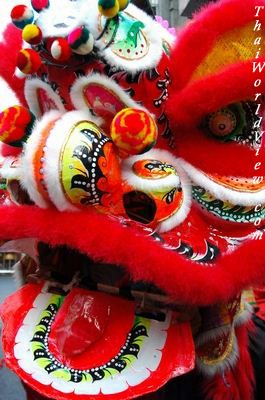
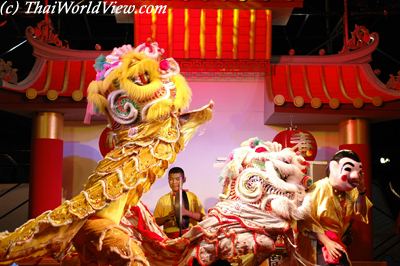
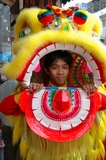
It is lucky for the lion dance to visit personal home or business. Local businessman use cabbages or lettuce dangled outside shops to attract the lions to visit their premises. It is especially lucky if the lion decides to put the owner head in its mouth. Accompanying the lion dance procession, there are specially percussionists using drums. Their drums represent the lion's heartbeat and must be continuously played as the lions dance or move from one location to another. People thank the lions by giving a fee.
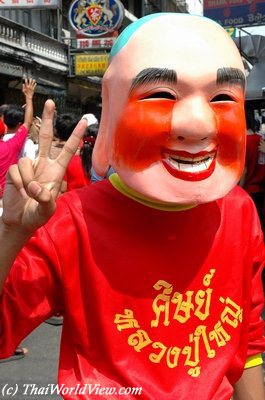
The lions move from one shop to another and perform the dance. In some case, the performers raised a pole. The lion climbs on the top of the pole and performs a dance or gets red envelopes ("ANG PAO") given by people located on buildings with higher floors.
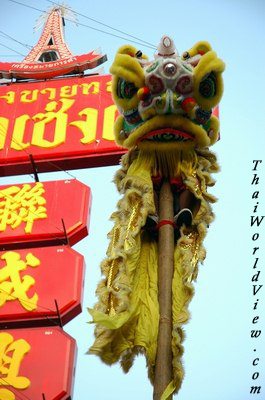
The lion dance is believed to ward off demons.
 Fly there with
Google Earth
Fly there with
Google Earth
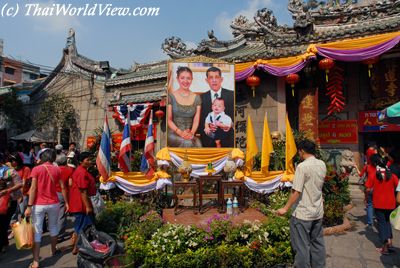
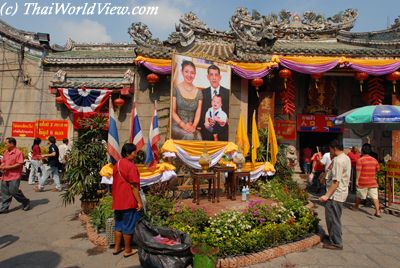
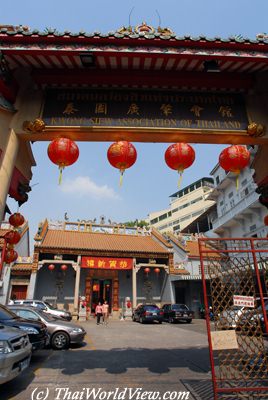
The Wat Mangkon Kamalawat (วัดมังกรกมลาวาส) is the largest and most important Chinese Buddhist temple in Bangkok.


comments powered by Disqus