THAI WEDDING
Increase or decrease font size for easier reading : A+ A-
- Doors ceremony
A procession led by the groom and with the relatives bring the gifts and the food to the bride's home. Music is played during the whole procession ceremony. The procession song is called "RAM VONG KLONG YAO" (รำวงกลองยาว).
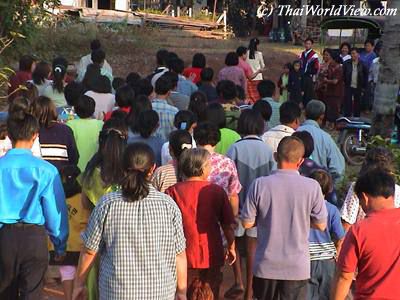
In traditional Thai weddings, the groom shall cross two gates called "silver gate" and "gold gate". The gates are on the way from the groom's home to the bride's home. To open the gate, the groom must give a gift, i.e. some money to the children. Of course the amount is bigger to open the gold gate than the silver gate.
Doors are symbolised by girls holding a chain. Often those girls are the bride's sisters. At each door the groom is asked if he is rich enough to take care about his wife and his family. He has to give an envelope to each girl in order that they remove the chain to let him pass. The envelope contains money. Each time a door is symbolically opened, people are shouting.
- Wash feet ceremony
When the groom has opened symbolically all the doors, the bride is waiting for him at the house entry. Here can happen the wash feet ceremony. It does not happen in all weddings. The husband stands on a small stool and his wife washes his feet and makes a Thai greeting towards them ("WAI" - ไหว้). It is a symbol of respect, allegiance to husband and also a way to thank the groom for all he has done for the wedding (most expenses are paid by the groom family). Now as Thailand has entered a new era of equality between men and women, this tradition is not always respected.
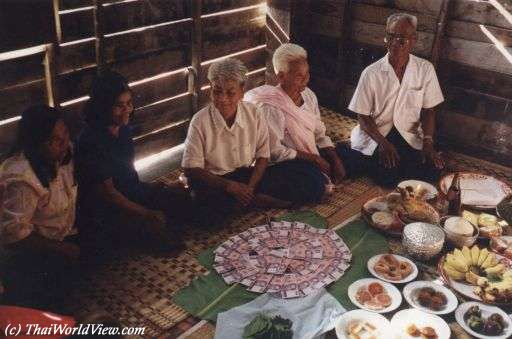
During the marriage ceremony, money is shown to the guests. Most of the time the money is only shown in order to save the face of the bride's family but after the marriage ceremony the money is given back to the couple. For foreigners the amount is often more than 100,000 Baht in cash and some gold jewels. Often a gold chain is offered. In Thailand gold is measured in "Baht", the Thai gold measure. Thai people like gold more than banknotes. Thai people think that if sudden problems happen, gold can be sold to get cash. The wedding day is not a random day. An astrologer has set the best day according to the stars.
In Thai society, people living together are considered as a married couple even if there are no official papers. Thai women often call their husband as "FAEN" (แฟน - boyfriend) instead of "SAMI" (สามี - husband). A nice nickname is also "THI RAK" (ที่รัก - darling). Often Thai Buddhist weddings are social weddings and the legal papers will be done later on if they need them for any legal purpose.
- White thread ceremony
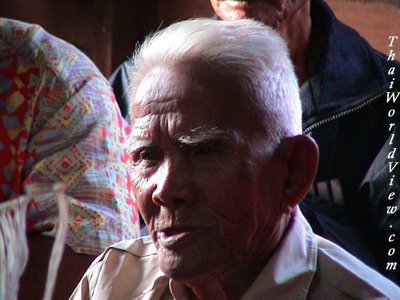
In Thai language the Thread ceremony is called "PHITI BAI SRI SU KWAN" (พิธีบ่ายศรีสู่ขวัญ).
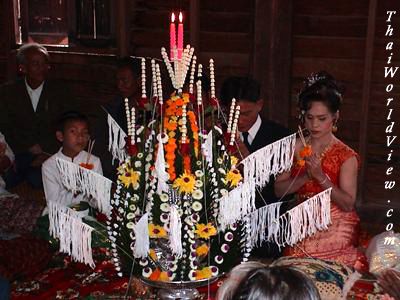
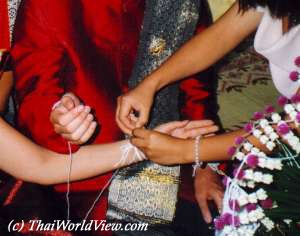
Then a long thread is attached to the newly weds wrists. The groom and bride tear it on their side until the thread breaks. The one, who has the longest part, is the one who loves deeper.
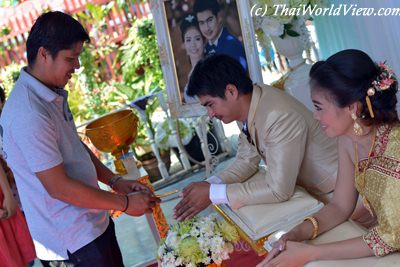
- Shell ceremony
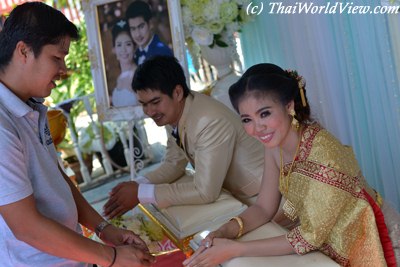
Outside the house, the newly weds kneel on a pedestal with their hands clasped together. A quite old man said auspicious sentences and anointed them on the forehead. The newly weds wear beautiful garlands around the neck.
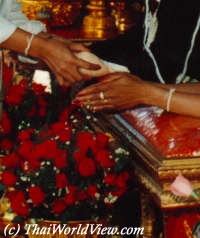
Then the guest puts an envelope (containing money) in a basket or gives a gift. Amount depends on status. Every time an envelope is given, a little gift commemorating the wedding is given to the guest. The ceremony continues with the photo seance with all guests. The ceremony is over around 11AM.


comments powered by Disqus