Increase or decrease font size for easier reading :
A+A-
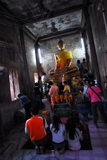
Thai people go to the "BOT"
(โบสถ์ - main building in a temple)
in order to pray and make good deeds
("THAM BUN" - ทำบุญ).
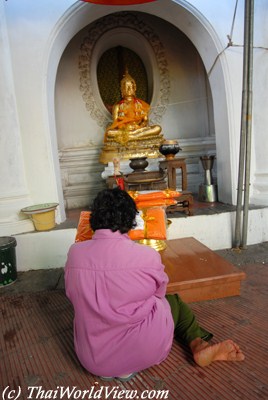
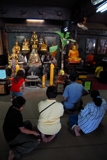
Praying
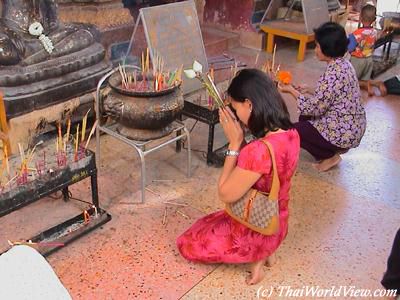
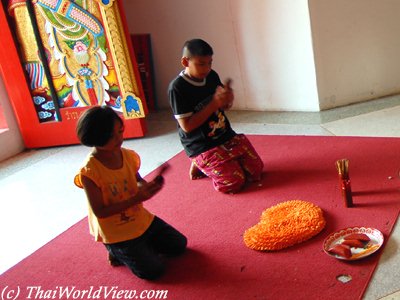
When praying and requesting a favor to Buddha, Thai
people take three incense sticks (ธููป),
i.e one pour the Buddha, one for the Sangha
(สังฆ - Buddhist community),
one for the Dharma
(ธรรม - teachings of the Buddha),
a flower (ดอกไม้ - orchid or lotus,
which symbolizes the Buddhist teachings purity) and a small
candle (เทียน - it symbolizes
comprehension enlightenment).
Then they lit the incense sticks, kneel
three times and put the incense sticks in front of the statue.
Incense sticks
For Buddhists in Thailand, incense is an important element of worship
to pay respect to Buddha.
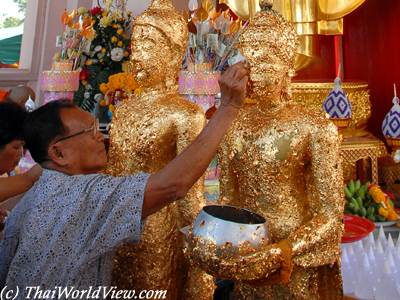
Stick golden leaves
They cover the Buddha statue with a thin golden leaf to honour Buddha's teachings.
In case of pain, the thin golden leaf shall be stuck at the same painful location
on the Buddha statue.
Garlands
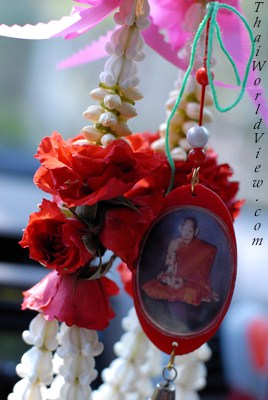
Garlands ("DOOK MALAI" - ดอกมาลัย)
are also offered to Buddha statues. Their white color symbolizes the beauty
of Buddha's teachings. When they get old, they symbolize the life impermanence.
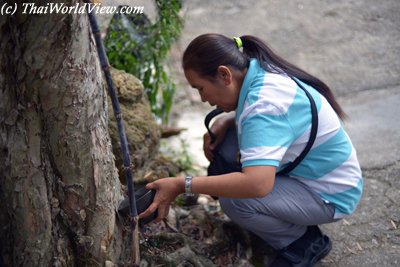
Pouring holy waterสาดน้ำ
or "SAT NAM" is the action of pouring holy water on the floor.
To give strength and good deeds to spirits,
Thai people pour water on the floor to honour the dead.
During Buddhist ceremonies, Thai people pray for dead relatives or give food
to monks in the name of dead relatives. It gives good deeds to dead spirits
and help them to shorten the time to wait for next life.
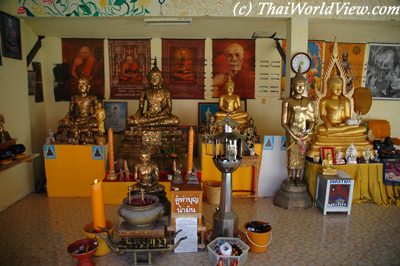
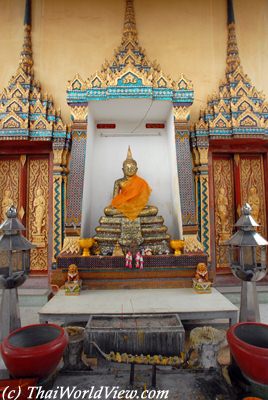
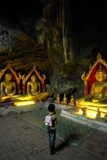
Buddha statues
Place of worship in a Thai Buddhist temple including
Buddha statues, candles...
Read future
Thai Buddhist people also read the future in paper wrapped around sticks.
In a box there are a few sticks. They shake the box in order that a stick falls
from it. Then they read the paper to know their future.
Praying
End of the day, the temple is closing. Oil burners are blown out, candles
have melt. The atmosphere is peaceful.
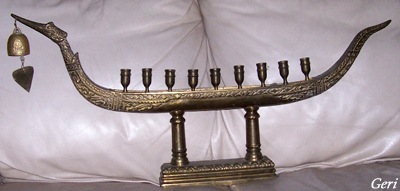
Burn candlesเชิงเทียนสุพรรณหงส์
or "CHEUNG THIEN SUPHANNAHONG " is often seen in temples to burn small
candles. It has the shape of one of the Royal barge.
Offerings
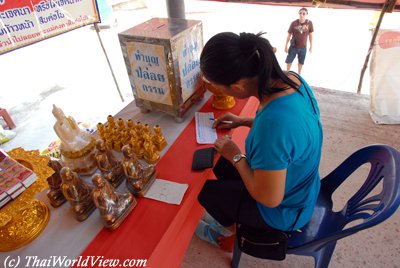
Donation box
This box used for donations in a Buddhist temple mentions "Doing good deeds to release the karma"
(ทำบุญปล่อยกรรม).
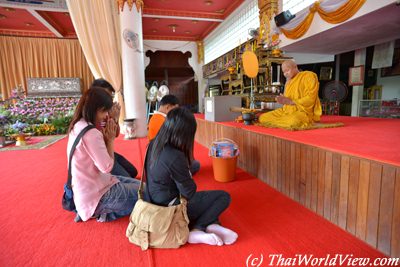
Offering clothes
This Thai lady is praying and offering yellow robes to Buddha and the monk
community.
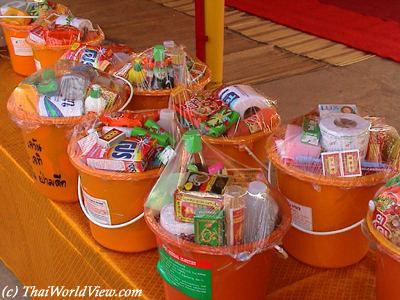
Buckets
Buckets are offered to monks as a way to get merit. In buckets can be found
many items such as rice, washing powder, medicine, monks clothes,
fruit juice, candles, matches, soap, umbrella, sandals, lights,
milk, tins, brushing tooth paste and brush, water, toilet paper,
noodles. Bulks are wrapped with transparent paper.
In some crowded temples, buckets are not opened
and are sold again immediately. In fact there are more buckets sold than monks
living in the temples. It is just an another way to get merit.
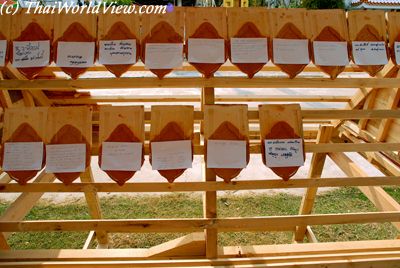
Roof parts offering
When doing offerings, people have to write their name in books or various artifacts
that will be embedded in building construction.
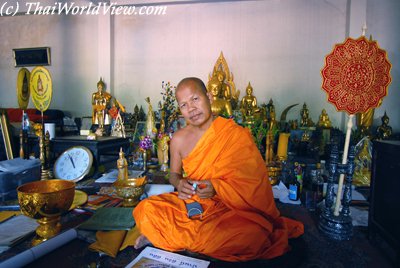
Temple abbot
When visiting temple, Thai people consult and discuss with monks about earthly problems
in order to get advice or to get a blessing from monks. Thai people offer money for the
Buddhist temple and the monks often offer amulets.
Visit on birthday
Going to Buddhist temple to make merit and perform prayers is an important
tradition for Thai people.
Various offerings to Buddha (เพื่อถวายเป็นพุทธบูชา)
are happening in Buddhist Thai temples.
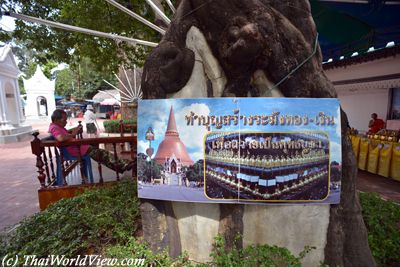
Bell offering
Offering such as bells (ทำบุญสร้างระฆังทอง-เงิน)
are happening in Buddhist Thai temples.
In Buddhist temples having a tall pagoda such as in Nakhon Pathom,
people can write prayers and their name on a paper. This paper is then inserted in a bell that
is sent on the top of the pagoda, representing the heaven.
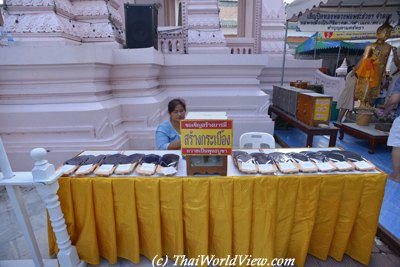
Roof parts offering
Offering such as tiles used for roofs can often be done in local Buddhist temples
(สร้างกระเบื้อง).
Holy day
Buddhist holy day
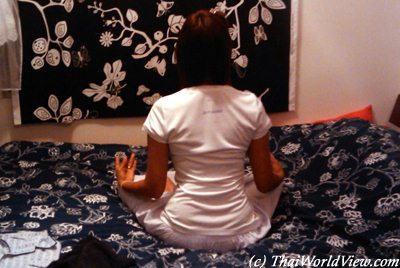
On Buddhist holy day ("WAN PHRA" - วันพระ), some
Thai buddhist laymen or laywomen wear white clothes and chant sacred prayers
(สวดมนต์) at evening time. Meditation is performed.
On Buddhist holy day (วันพระ),
according to Thai traditional belief, hair shall not be cut on that day to preserve longevity
(จะอายุนาน).
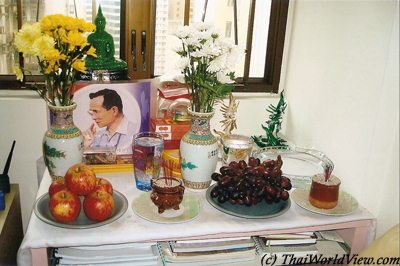
Buddhist altar
On Buddhist holy day ("WAN PHRA" - วันพระ),
fresh flowers are put in the vases on the family Buddhist altar.
Vegetarian food is only allowed on that day.
Incense sticks are lit. Offering such as fresh fruits is done.
On the altar, various other religious objects are displayed, i.e.
two mystical snakes (พยานาค - "PHAJANAK"), betel
(หมาก) for old people, money (coins and notes), water through two glasses
for the mystical snakes be able to drink and one plate for the mystical snakes be able to swim,
fresh flowers and fruits. It shows religion syncretism in Thailand.