
FOREST MONKS
Increase or decrease font size for easier reading : A+ A-
Thudong monks believe that the practice of wandering went back to the Buddha's time. They think that the value of the Dharma is not to be found in reading and studying but in training the mind. The best place to study the Buddha's teaching is not in a confortable Buddhist temple but inside a deep and remote forest.
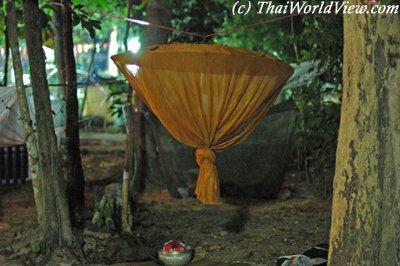
The "KLOT" is a large umbrella equipped with an insect screen and a wooden pole that could be pitched and set up like a small round tent to protect monks from dew and insects.
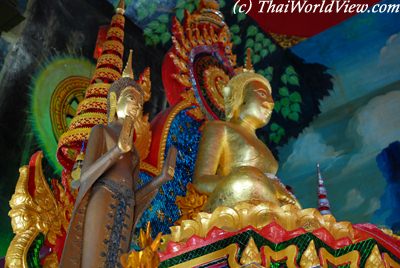
The awarding honorific titles given to abbots are in conflict with the Buddhist core fundamentals that urged monks to turn away from wordly distinctions of authority, status and wealth.
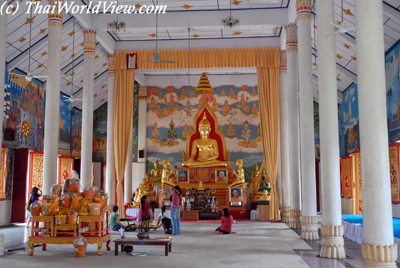
There was a wide gap between Thammayut administrators, who favored the ideal of a settled monastic life and Thammayut thudong monks, who favored the wandering ascetic ideal. This cultural gap was between the Lao Thudong monks and the Bangkok trained monks.
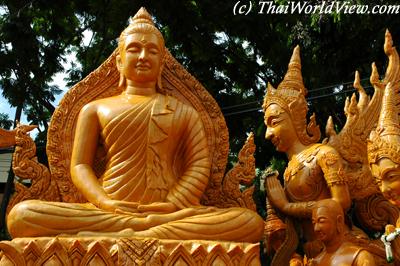
In Thai Buddhism, original Pali language is still used. In China, traductions have been done for Chinese Buddhism.
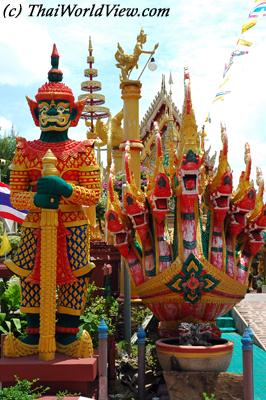
Thammayut authorities recruited the wandering monks to teach the Dharma to villagers and to build forests permanent temples. The military coups d'etat of years 1957 and 1958 signified a major change for Thudong monks. Under martial law, any unconformist monk was at risk to be labeled as insurgents and communist sympathizers. Many Thudong monks have no choice but to settle and establish their own permanent forest temple.
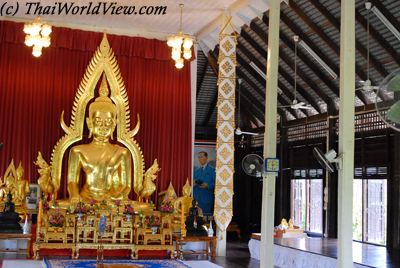
In the Northeast, vast parts of forests have been turned into single crop plantations producing food for exports. In 1961 the forests represented 42% of Northeast region but only 14% in 1988.

Many big temples in Isan have community radio stations. Most DJ are the monks.




comments powered by Disqus