Amulets
Increase or decrease font size for easier reading : A+ A-
- พระเคื่รอง or "PHRA KREUANG" are Buddhist holy amulets.
Buddha holy amulet is a lucrative business in Thailand. Made of stone, pottery or metal, temples use them to remind followers of the Buddha's teachings and to commemorate deceased monks. Sales eventually became a key source of income. There are specialised markets to buy them. Prices can be very high (up to one million Baht) for high sacred amulets. Chinese, Hong Kong and Singapore people are also interested in amulets business but Thailand still remains the best place for that kind of business. There are even persons collecting them. This kind of worship for amulets started at RAMA IV reign.
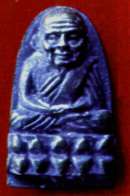
Some people also wear several holy amulets to have more protection. Some also wear amulets in shape of male sex in order to improve their virility. Many magazines about holy amulets are sold in Thai book shops.
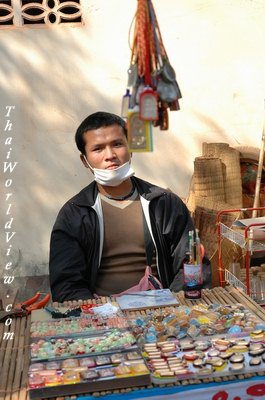
In year 2007 one woman was killed and 30 people were injured when about 10 000 people stampeded to buy amulets in southern Thailand. The crowd was waiting to buy special-edition Jatukam Ramatep amulets. The amulets have a high resale value and many speculators were there. The original Jatukam Ramatep amulets were introduced 20 years ago by Khun Phantharak Rajadej, a police chief from Nakhon Si Thammarat. They became popular when he died at the age of 108.
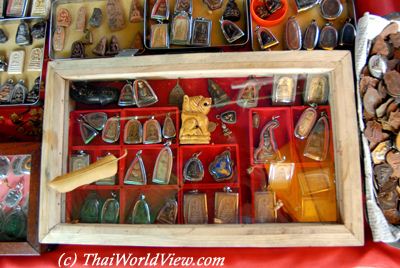
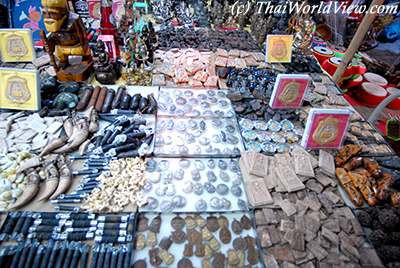
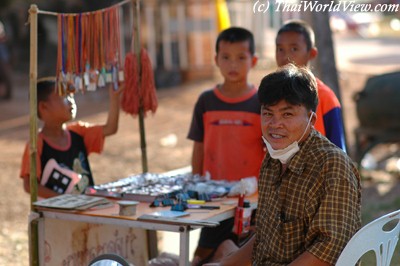
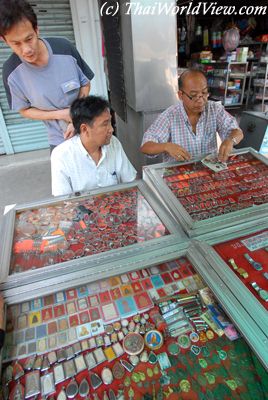
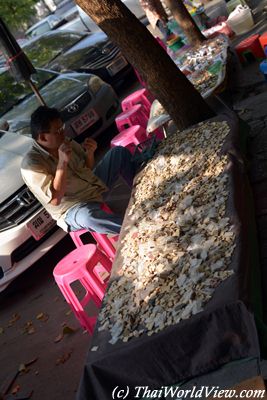
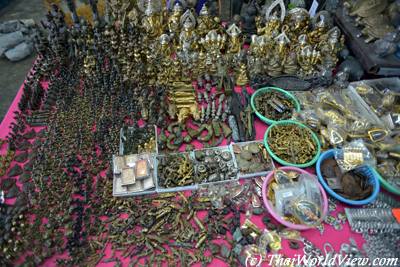
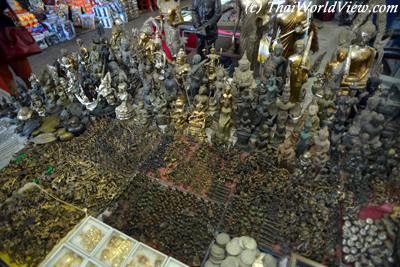
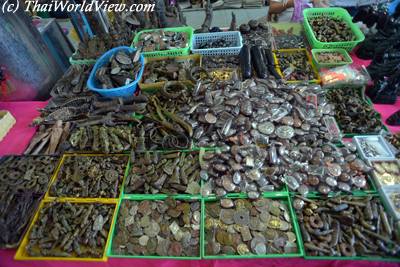
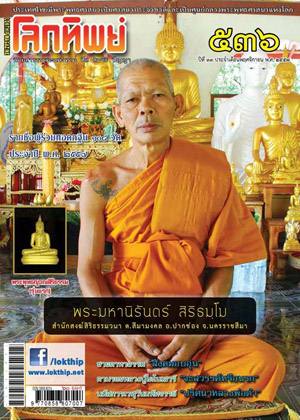
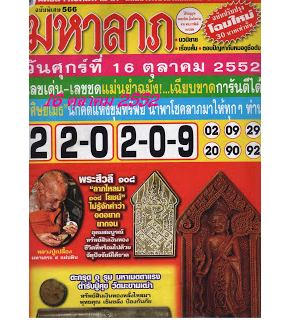
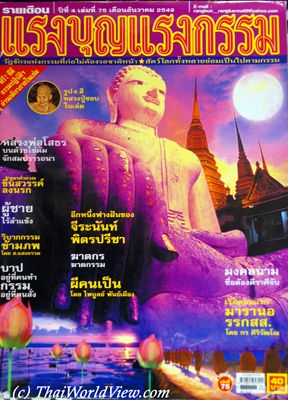
Nowadays, many magazines about Buddhism and sacred amulets can be found. Amulet business is Thailand is big. Buddhism has gone through high commercialisation.
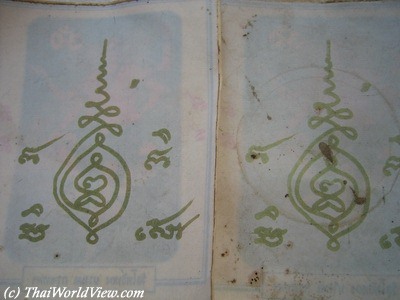
Thai people believe it is possible to change the destiny, to escape the fate, to lessen the sufferings by magical interventions such as tattoos, amulets.
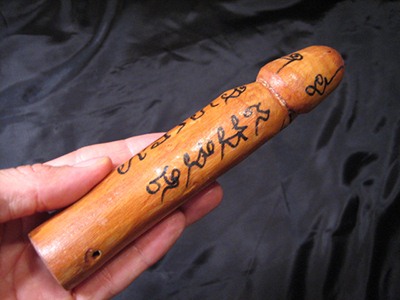
Some Thai amulets are shaped like the phallus, inherited from ancient Shivaism of India via Cambodia.
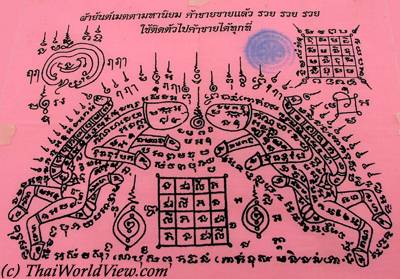
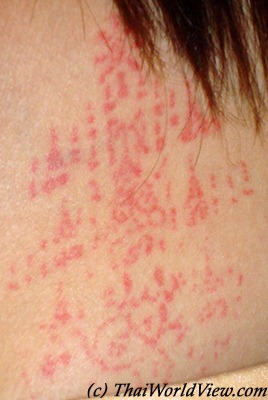
- เวรกรรม or "WEN KAM" is the result of the past bad actions.
Bad actions and rewards of these bad actions take an important place in Buddhism and in Thai behaviour. When somebody dies, if he behaved in a bad way, he is sent to hell in order to be tortured. After a while, he shall have a new rebirth. This life will be hard and tough. He has to pay for his past bad actions. Only when he died, he will have consumed his bad actions.
Thailand has also a unique traditional death ritual, i.e. applying soot or red lime to the corpse to identify the person when he or she is reborn.
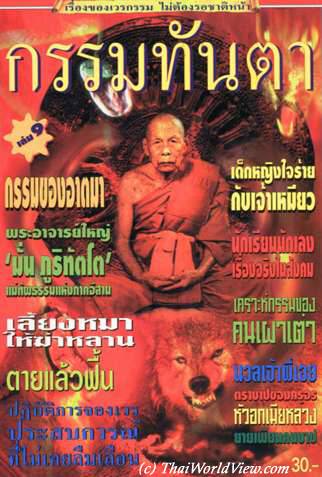
Thai people often say "WEN KAM" (เวรกรรม) when they have bad luck. It means that their bad luck is linked to their past behaviour in their previous life. Thai people often make offerings to temples and monks in order to gain merit and lessen their past bad actions.
* เคยเป็นคู่กันแล้วไม่แคล้วกันเพราะมีกรรมเป็นเครื่องผูกกัน - they are an inseparably couple, Karma always unite them
* เป็นเนื้อคู่กัน - they are matched to each other through Karma
* คู่เวรคู่กรรม - they are a couple linked by Karma
* ชาติไหนก็มาเกิดเป็นเนื้อคู่อยู่เรื่อย - at each rebirth, they are destined to be together
Thai people believe that when people die, a relative has to cremate them or bless them. If this is not done or the body is not found, people believe the person will appear over and over again to show where they are.
In 2001 a woman who claims her son has been reincarnated as a lizard can keep it until she performs religious rites to send his spirit away. She claims the monitor lizard followed her home after her son was cremated one month ago. It's illegal to keep the reptile in captivity, but officials have agreed to let her keep it until she's performed the rites. Crowds have visited her home, believing the lizard is lucky. Some have rubbed its skin hoping to see winning lottery numbers. The reptile is being fed on yoghurt and milk - favourites of the dead boy. The lizard is said to be in a poor condition and growing weaker. It will be taken to a wildlife sanctuary once the rites have been performed.
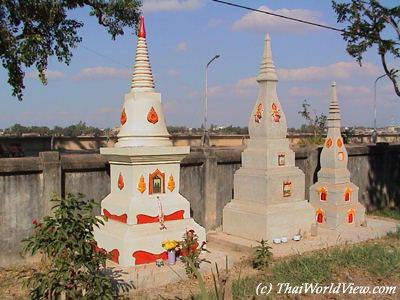
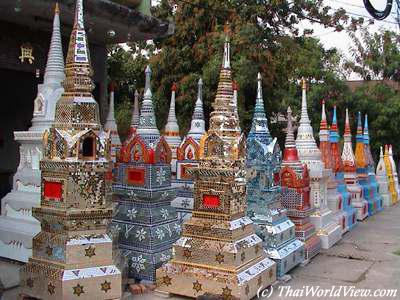
- สุสาน or "SUSAN" is a cemetery. Regional Buddhists believed that the presence of monks in a cemetary would release the spirits of the dead residing there.
In year 2002 a religious rite was organized to get rid of ghosts many locals believe were haunting an accident-plagued intersection. Some local people believed the intersection was haunted by ghosts who wanted more people to die so that the spirits of the dead would guard the road for them. Monks performed a prayer to cast out all bad spirits and bring good luck.
It is said that during the first days of ordination, young monks, while meditating, are assaulted by ghosts in order to frighten them and to force them to defrock.
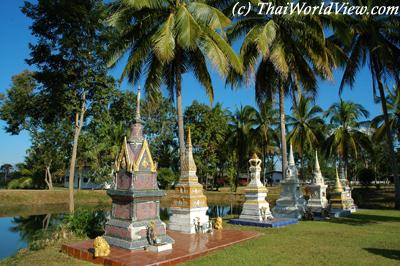
Still today every person who died must be cremated and not buried. When the body is cremated, the soul goes away and waits until next reincarnation. If buried, it stays on earth as a spirit and it harms everybody. In 1998, a big cremation was organised to burn many dead people. Nobody had claimed the corpses. The Poh Tek Teung Foundation and Ruam Katanyu Foundation staff are known as "body snatchers" working in great anticipation of collecting some dead corpses.
- ฤาษี or "REUSI" is an Ascetic.
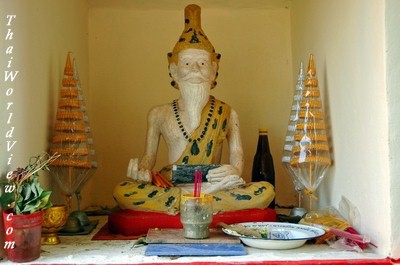
The Thai word "REUSI" is meaning seer (one who sees).
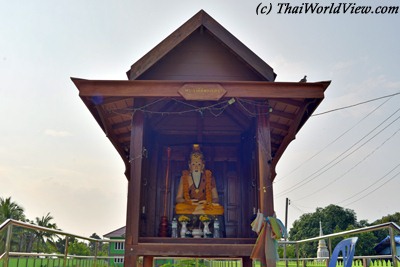
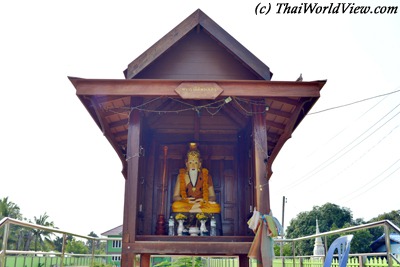
The Reusi are the protectors and teachers of the natural sciences such as healing, astrology, palmistry...